

2026 Annual Meeting
Plenary Program
The SAHM Program Committee is delighted to share with the 2026 Plenary Program for the SAHM Annual Meeting in Seattle. We look forward to sharing more of the exciting SAHM 2026 Annual Meeting Plenary Program in the coming weeks! Please check back for updates.
Schedule
- Tuesday, March 3, 2026 at 8:30 AM with Adriana Galván, PhD
- Wednesday, March 4, 2026 at 8:30 AM with Dr. Yvette Efevbera, ScD, MSC
- Friday, March 6, 2026 at 10:00 AM with Rachel Goldstein, MD
Gallagher Lecture
Tuesday, March 3, 2026 at 8:30 AM
Adolescent Brain Development: The Importance of Connections
Adolescence is a special period of development. Young people ages 10-24 reach important developmental milestones during this time of life during which they explore, grow, and connect. The neurodevelopmental changes that occur during adolescence support these developmental changes. As revealed from neuroscience research, the adolescent brain exhibits significant plasticity and undergoes an important period of connectivity—strengthening of brain pathways—that reflect the increasing connections adolescents have with their peers, families and communities. This talk will provide an overview of brain development, current understanding of adolescent neuroscience, mental health, and an opportunity to discuss how this research may be useful in supporting system-impacted youth.
Learning Objectives:
- Understand brain plasticity in the adolescent brain
- Examine the role of the dopamine system in learning in the adolescent brain
- Identify the critical role of context and experience in brain development
About the Gallagher Lecture: The Gallagher Lectures honor J. Roswell Gallagher, MD, FSAHM, the founding president of the Society for Adolescent Health and Medicine. The lectures were designed to provide a forum for outstanding speakers to address the full spectrum of adolescent medicine’s concerns: the biological, the psychological, and the social. To view a list of past lecturers please visit the Gallagher Lecture page.

Adriana Galván, PhD
Professor of Psychology
Co-Executive Director of the Center for the Developing Adolescent
Dean and Vice Provost of Undergraduate Education
University of California, Los Angeles
Learn More about Adriana Galván, PhD
Dr. Adriana Galván is a Professor of Psychology and the Dean and Vice Provost of Undergraduate Education at the University of California, Los Angeles. She is also the Co-Executive Director of the UCLA Center for the Developing Adolescent. As a neuroscientist her career has been focused on adolescent brain development and how it supports developmental milestones during this significant period of life. Her research expertise focuses on characterizing the neural mechanisms underlying adolescent behavior to inform policies that impact young people.
Dr. Galván has published over 130 scientific articles on the topic and is the author of The Neuroscience of Adolescence (Cambridge University Press). Her research, generously funded by the National Institutes of Health, National Science Foundation, and numerous private foundations, has been featured in several media outlets including The New York Times, Washington Post, PBSNewsHour, and NPR. She received her B.A. in Neuroscience and Behavior from Barnard College, Columbia University, and her Ph.D. in Neuroscience from Cornell.
She has received multiple recognitions for her work, including from the National Academy of Sciences, American Psychological Association, Cognitive Neuroscience Society and William T. Grant Foundation. She is also the recipient of the UCLA Gold Shield Faculty Prize. In 2018 she was a Fulbright Scholar in Barcelona and in 2019 she received the White House Presidential Early Career Award for Science and Engineers (PECASE) award.
From “Just a Patient” to Partner: Positive Youth Development in Chronic Illness Care and Research

Ela Chintagunta, BA
Council Member
Young Patients’ Autoimmune Research
and Empower Alliance (YP AREA)
Young people with chronic autoimmune conditions are often positioned as subjects of care and research rather than as experts, leaders, and co-creators. This plenary follows one young adult’s journey with juvenile onset rheumatoid arthritis, from “patient” to advocate and emerging researcher, to show how positive youth development can reshape identity, agency, and relationships with care teams. Building on this narrative, the session introduces Young Patients’ AREA, a young adult-driven organization that empowers youth to be involved in health research and advocacy. Together, these two stories offer concrete examples of how centering youth strengths, voice, and leadership can transform both individual trajectories and the systems that surround them.
Learning Objectives
By the end of this session, participants will be able to:
- Describe how one young person’s experience with juvenile onset rheumatoid arthritis illustrates principles of positive youth development in the context of chronic illness.
- Discuss how Young Patients’ AREA incorporates youth voice, leadership, and partnership in health research and advocacy.
- Consider ways that insights from the speaker’s story and Young Patients’ AREA might inform their own approaches to engaging adolescents and young adults with chronic illness.
Learn More about Youth Plenary Speaker Ela Chintagunta, BA
Ela Chintagunta is a patient partner, researcher, and advocate whose work focuses on making pediatric and adolescent rheumatology research more accessible, equitable, and driven by the priorities of young people living with autoimmune conditions. As a dual Biology and Chemistry graduate from Grinnell College and recipient of the 2023 Childhood Arthritis and Rheumatology Research Alliance (CARRA) Outstanding Patient/Caregiver Service Award and the 2020 Arthritis Foundation’s Emerging Leader in Advocacy Award, she bridges lived experience with scientific training to transform how clinicians and researchers partner with youth and families.
Since 2021, Ela has served as a Patient Partner with CARRA, collaborating on multi institutional studies to identify patient centered priorities, shape study design, and review grants for meaningful and feasible engagement of patients and caregivers. She is a Council Mentor with the Young Patients Autoimmune Research and Empowerment Alliance (YP AREA), where she mentors new patient partners, co creates tools to make research understandable for adolescents and young adults, and leads independent projects on topics such as needle fear, dissemination strategies, and creating safe spaces for young adult partners in research. Ela has contributed to peer reviewed and in progress manuscripts on youth driven research partnerships and adolescents’ and young adults’ preferences for engaging, understandable, and socially relevant health research findings.
Grounded in her own experiences as a young adult with a rheumatic condition, Ela’s work centers on the belief that youth are not just study participants but co creators of better science and better care. Through her advocacy with the Arthritis Foundation, service on national advisory councils, and mentorship of emerging youth leaders, she continues to build infrastructures where disabled and chronically ill young people can lead research, policy, and clinical conversations about their futures.
Plenary II
Wednesday, March 4, 2026 at 8:30 AM
Roots of Resilience: Ending Gender-Based Violence and Child Marriage So Adolescents Can Thrive
Harmful practices like gender-based violence and child, early, and forced marriage shape the ‘soil’ surrounding many adolescents, constraining their health, agency, and potential — especially for girls. Drawing on global evidence and community insights, Dr. Efevbera will invite the SAHM community to cultivate equity-driven advocacy that transforms these conditions so young people can truly thrive.
Learning Objectives:
- Identify how gender-based violence and child, early, and forced marriage affect adolescents’ health and developmental outcomes.
- Describe global or community-driven strategies that foster resilience and well-being among adolescents facing structural adversity.
- Apply an equity- and advocacy-focused lens to support systems-level actions that promote adolescent thriving in diverse contexts.

Dr. Yvette Efevbera, ScD, MSc
Founder & CEO
SHE Thinks Group LLC
Learn More about Dr. Yvette Efevbera, ScD, MSc
Dr. Yvette Efevbera is a global health leader, gender equity strategist, and Founder & CEO of SHE Thinks Group, a Pan-African strategy, advisory, and leadership firm advancing health, gender equality, and youth development. With a background spanning academia, philanthropy, and systems leadership, she partners with global organizations and community leaders to co-create equitable strategies that center girls and women. She previously led global adolescent and gender portfolios at the Gates Foundation, shaping multi-million-dollar initiatives to transform gender norms and health outcomes, and contributing to an advocacy partnership between Melinda French Gates, Amal Clooney, and Mrs. Michelle Obama.
Dr. Efevbera’s work has been published in The Journal of Adolescent Health, Social Science & Medicine, and BMJ Global Health. As a donor, she also funded two special supplements in The Journal of Adolescent Health focused on evidence to end child marriage in global and U.S. contexts, featuring youth authors and a youth guest editor. She has spoken at leading institutions including the University of Southern California, Michigan State University, and global health and development convenings across Africa, Europe, and North America.
She brings a deep commitment to reimagining how systems invest in the leadership, health, and power of girls and young people globally.
Healing Our Roots to Thrive: Centering Refugee Mothers’ Voices on Gender-Based Violence and Displacement
This presentation reframes gender-based violence (GBV) not only as an isolated traumatic event, but as a developmental environment that shapes adolescent health trajectories. While GBV is often discussed in terms of disclosure and crisis response, many young people experience violence, or the normalization of it as part of the broader social and structural context in which they grow, form identity, and navigate relationships.
Drawing from community-based advocacy, refugee and immigrant health research, and youth-centered organizing, this session will explore how witnessing, experiencing, or living within environments shaped by GBV influences identity formation, mental health, somatic symptom expression, autonomy development, and trust in healthcare systems. Particular attention will be given to intersecting social determinants of health, including immigration status, housing instability, poverty, racism, and language access, and how these structural factors cluster with increased vulnerability.
Noun Abdelaziz
Advocacy Director
United Women of East Africa Support Team
Research Consultant
UCSD Refugee and Immigrant Health Unit
Learn More about Youth Plenary Speaker Noun Abdelaziz
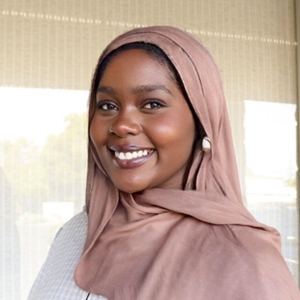
Noun Abdelaziz is a community organizer, health researcher, and Global Health Masters student at UC San Diego. With deep roots in public health advocacy, mental health education, and nutrition research, Noun brings both heart and insight to her work. As a Sudanese Egyptian immigrant and poet, she weaves her lived experience into every space she enters and creates connections that are both meaningful and grounded in culture.
Noun is a Advocacy Director at the United Women of East Africa Support Team (UWEAST), and Research Consultant for the UCSD Refugee and Immigrant Health Unit, where she works to uplift community voices and drive youth-centered initiatives. She also proudly represents UWEAST on the San Diego Refugee Communities Coalition’s Policy Council, advocating for policies that reflect the needs and strengths of refugee communities.
Over the years, her leadership has been recognized through several honors, including a nomination for the 2018 California Endowment Youth Awards, the 2019 National Philanthropy Day’s Outstanding Youth/Student Volunteer award, and the American Heart Association’s 2020 Student Scholar award. She was also highlighted by U.S. News & World Report as a “Citizen of the World.”
Whether she’s leading research with the UC San Diego Refugee Health Unit or showing up for her community through storytelling and advocacy, Noun continues to center healing, justice, and belonging in all that she does.
Plenary III
Friday, March 6, 2026 at 10:00 AM
Adolescent Confidentiality and the Electronic Health Record: A Balancing Act in the 21st Century
Rachel Goldstein MD
Clinical Associate Professor
Stanford University School of Medicine
This talk will review the importance of protecting adolescent confidentiality, current laws that govern consent and confidentiality for adolescents nationally with notable state examples and discuss approaches to implementing functionality within the electronic health record that allows for sharing of health information with young people and their families while protecting adolescent privacy.
Learning Objectives:
- Describe the current landscape of consent and confidentiality laws within the U.S. that affect sharing of health information with patients and their families
- Understand scenarios where confidential information can be leaked throughout and after a clinical encounter and discuss opportunities to mitigate these risks
- Discuss practical considerations for managing confidential information within the electronic health record when caring for adolescent and young adult patients.
Learn more about Rachel Goldstein, MD
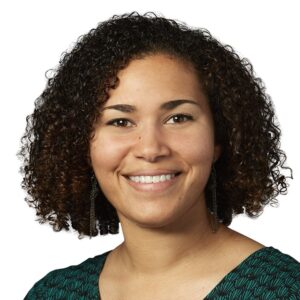
Dr. Rachel Goldstein is an Adolescent Medicine specialist and Clinical Informaticist at Stanford. She provides primary care as well as subspecialty care focused on reproductive health, eating disorders, and substance use among other conditions. Her research focuses on expanding reproductive health care access and adolescent confidentiality and the electronic health record.
Young People Deserve Privacy Too: Barriers to Safe Healthcare Access for Adolescents

Ren Culbreath
Consultant, Advocate, Visionary, and Educator
This plenary will delve into adolescent’s apprehension accessing healthcare services, for various reasons. Emphasis on marginalized communities feeling fear of discrimination, and the consequences of an adolescent’s guardian discovering information they requested to stay private. This plenary will be supported with evidence from research studies, along with methods to protect adolescent’s confidentiality in EMRs, and digital privacy via healthcare portals. This session will also ask the question: How do we reach these young people? As well as providing examples of means to do so, such as utilizing ‘teen’ profiles on healthcare portals, discussing with adolescents openly about their state/Country’s minor confidentiality laws, educating adolescents on how their healthcare information may follow them from state to state (U.S. specific) and developing trainings for adolescent healthcare providers to ensure specific health information private from their guardians.
Learning Objectives:
- By the end of this session, participants should be able to:
- Identify 4 reasons a young person may not access healthcare when they otherwise need services.
- Evaluate their own organization’s documentation portal for gaps in adolescent confidentiality. (Do parents have access to the minors account? Can parents/guardians view visit documentation that they themselves did not attend? How can you create a hidden visit note from their guardian?)
- Create language to safely separate an adolescent from their guardian to discuss sexual health and other private matters
Learn more about Youth Plenary Speaker Ren Culbreath
Ren Culbreath (They/He) is a visionary, storyteller, educator, and zealous advocate for marginalized communities across the globe. Utilizing his lived experiences as a storyteller, Ren has proudly contributed to the successful Planned Parenthood campaign that enshrined reproductive healthcare in Maryland’s constitution!
His extensive knowledge in adolescent sexual health and experience in engaging adolescents in these conversations allows him to form meaningful and memorable connections anywhere. Ren has facilitated both presentations and conversations encompassing topics such as (but not limited to); HIV & STIs, Consent, Suicidality, Healthy Relationships, and Minor rights accessing healthcare confidentially in the U.S.A.
Ren is devoted to combating the harms impacting marginalized communities: Racism, classism, colonialism, sexism, homophobia, transphobia, and believes these shifts in culture begin with one dialogue at a time.
We look forward to sharing more of the exciting SAHM 2026 Annual Meeting Plenary Program in the coming weeks! Please check back for updates.